Breeding2 min read
Choosing a breeding stallion: the criteria of selective breeding
Bloodlines, conformation, gaits, temperament, health, fertility and the quality of his foals: the criteria for choosing the stallion that will move your breeding forward.
Published 11 October 2026
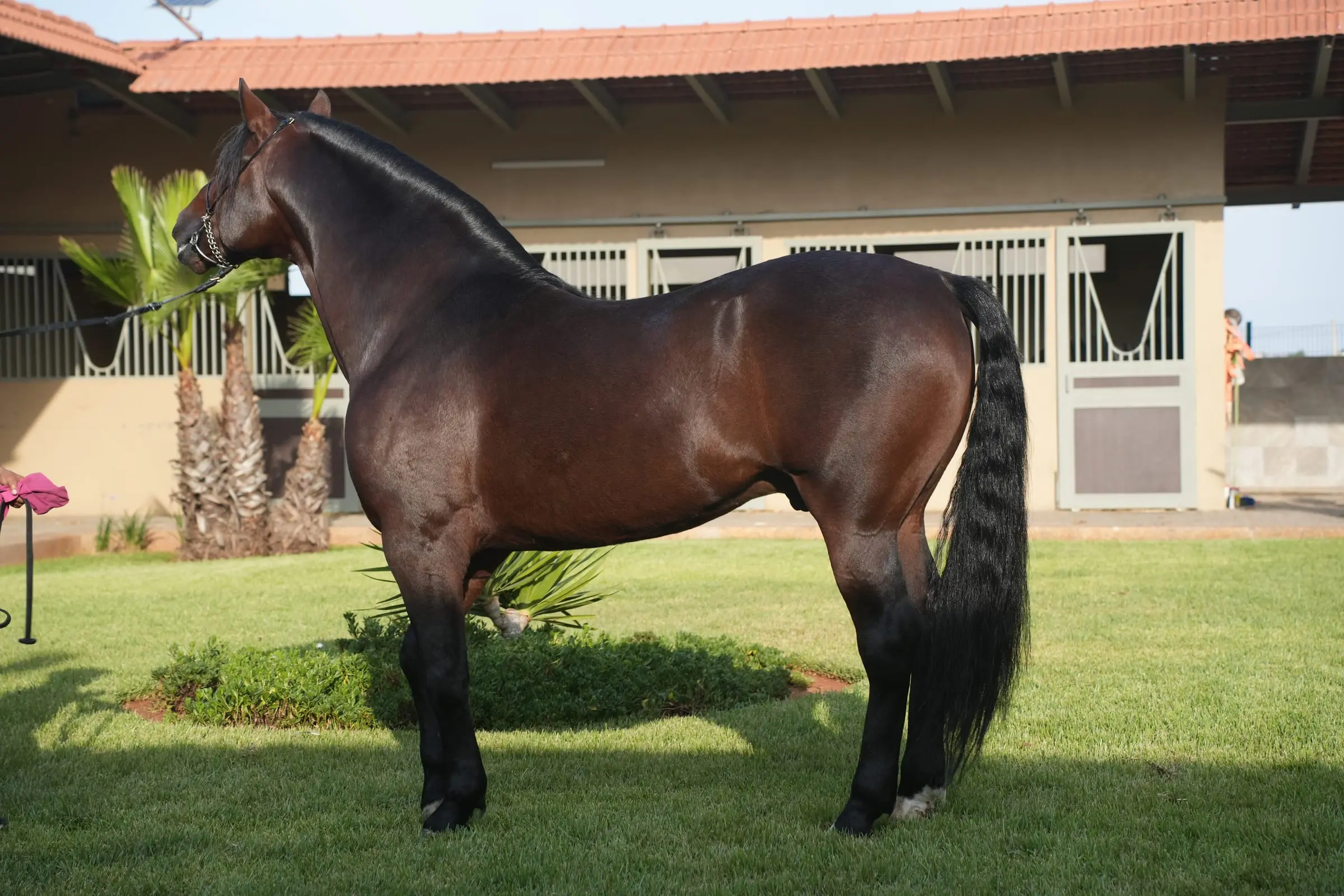
Choosing a stallion is one of a breeder’s most important decisions: he passes on half of his genetic heritage to the foal and, season after season, shapes the character of a whole breeding programme. Here are the criteria we use.
Verified bloodlines
A breeding stallion must be registered in his breed’s stud-book, with known ancestry over several generations. The pedigree shows the qualities passed on through both the sire line and the dam line: see how to read a pedigree.
Conformation and type
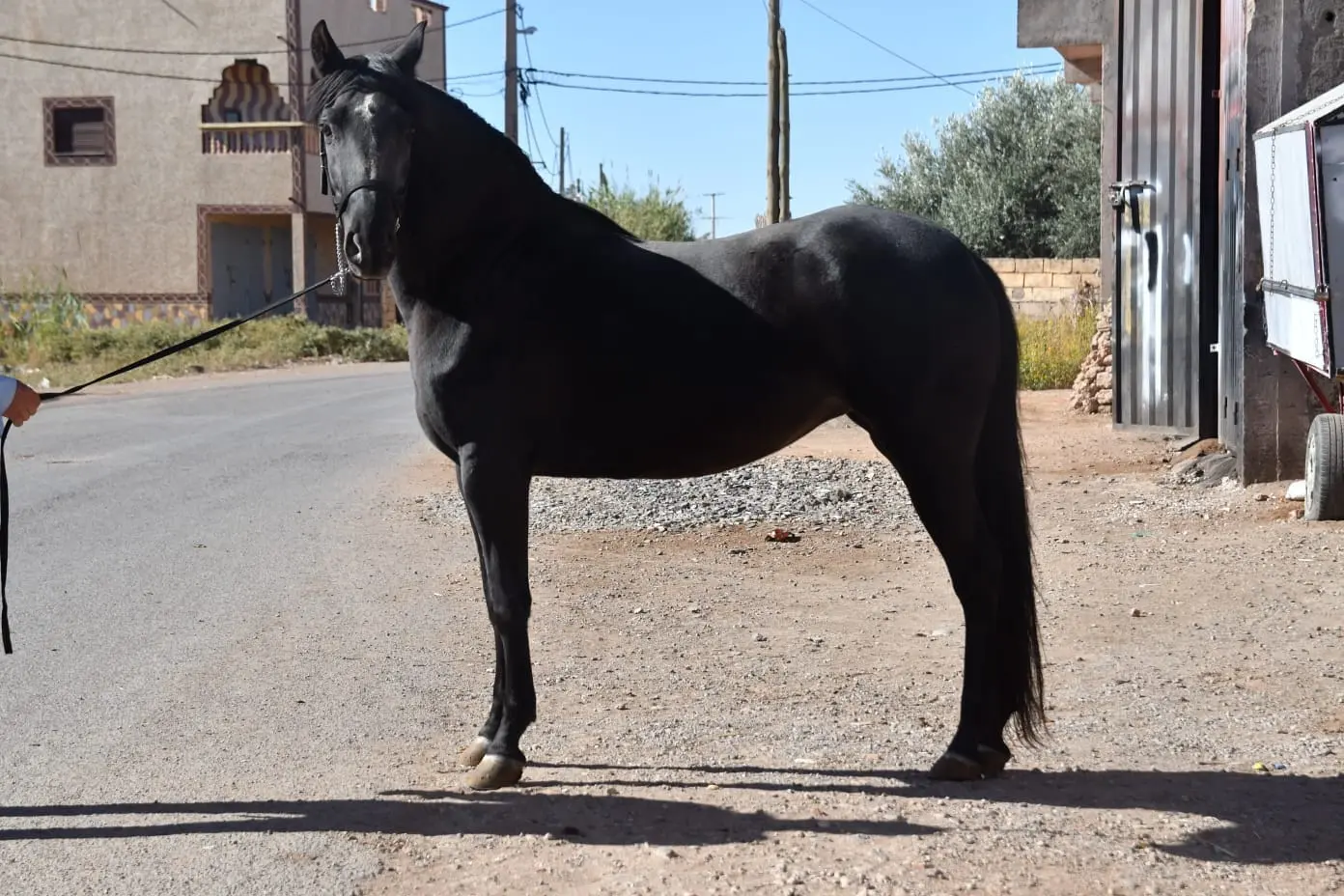
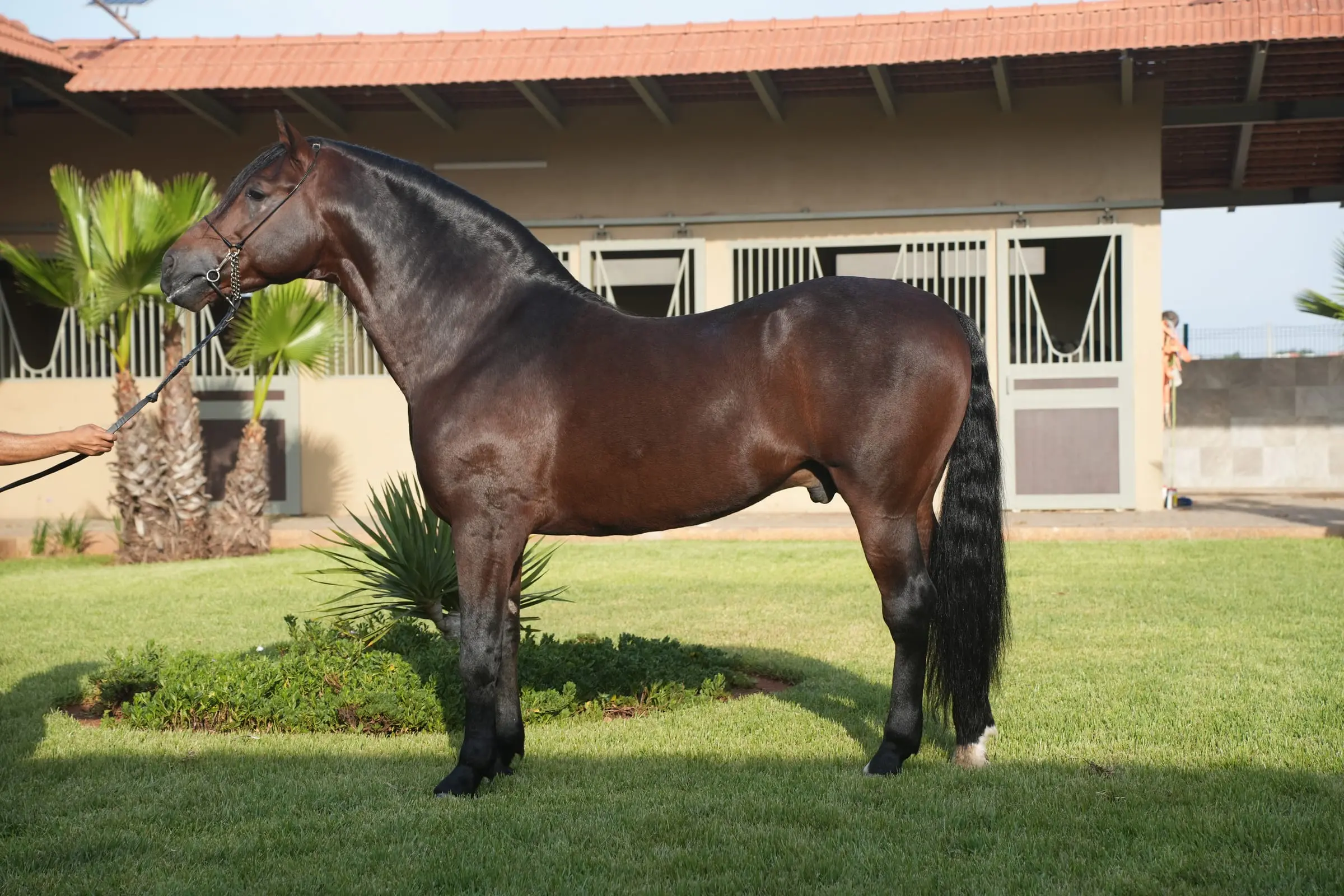
The stallion should be true to type, that is, representative of his breed standard, with correct conformation: a well-set head, a well-angled shoulder, a strong back, straight limbs and sound feet. His faults will reappear in his foals.
Gaits
Regular, ample and energetic gaits are sought after, whether his foals are destined for conformation and gaits shows or for riding use.
Temperament
Temperament is partly inherited. A calm, honest stallion that is easy to handle is more likely to sire foals that are pleasant to train, an asset for Tbourida as much as for leisure riding.
Health and fertility
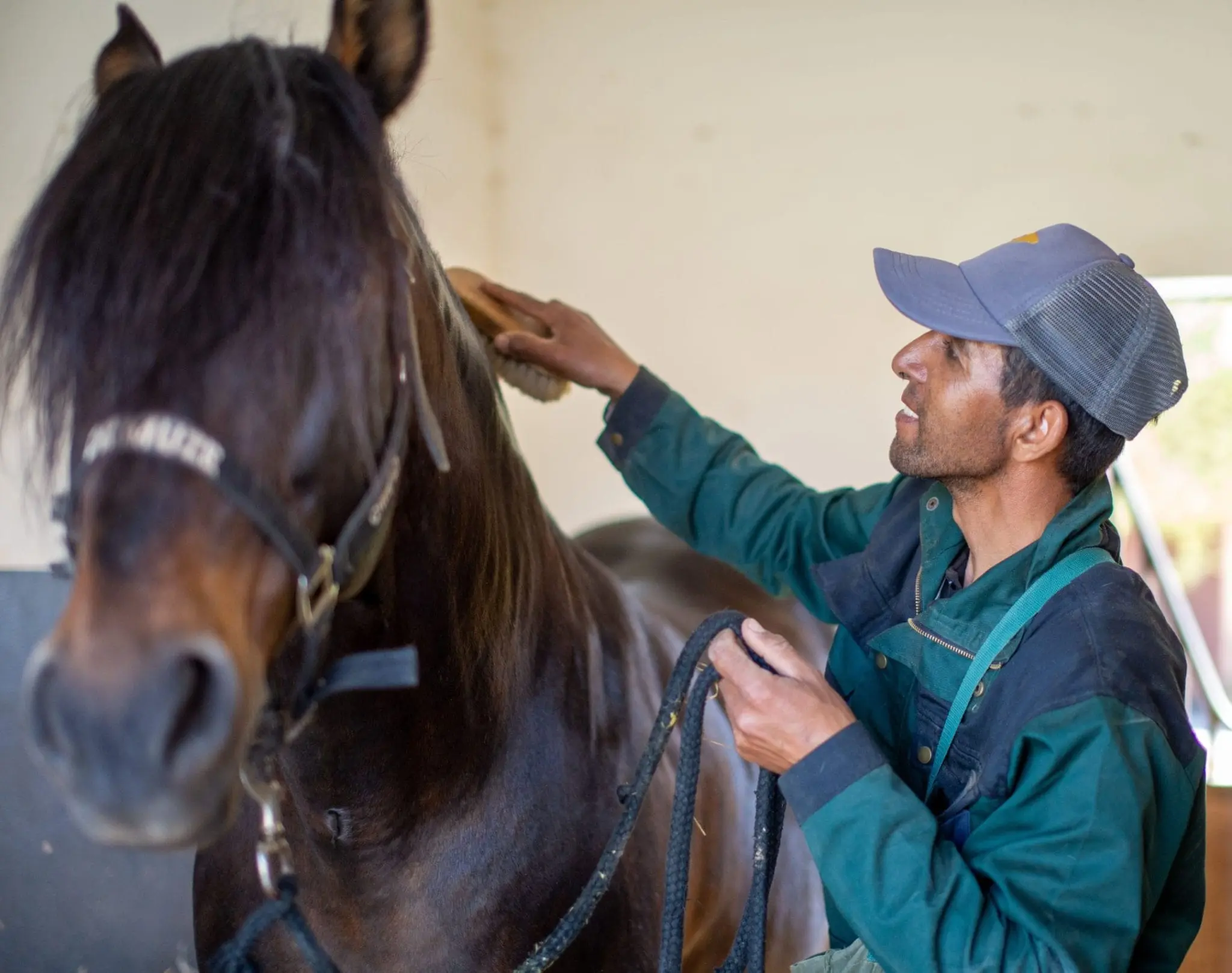
A thorough veterinary examination is essential: general condition, limbs, freedom from transmissible disease and semen quality. A stallion with poor fertility complicates the breeding season and makes it more expensive.
Performance and progeny
Results in shows or in use give an idea of a stallion’s potential. But the best indicator remains the quality of his foals: it is by watching them grow that you truly judge what he passes on.
Complementing the mare
There is no ideal stallion in absolute terms: you choose a stallion for a particular mare, to make up for her weaknesses and reinforce her strengths. Very close matings should also be avoided by spotting the ancestors the two have in common.
Approved stallions
AMCBAB has created a stallion approval framework and makes selected Barb and Arab-Barb stallions available to breeders. SOREC also imports stallions and frozen semen to broaden genetic diversity.
At El Adiyat Stud, our stallions are the Arab-Barb Nawrass Sahel and the Barbs Nouarim Atlas and Jaoual CB. Their profiles show their pedigree and their 2026 foals.
Frequently asked questions
- What are the criteria for choosing a stallion?
- Bloodlines verified in the stud-book, true-to-type conformation, good gaits, an easy temperament, good health and fertility, and the quality of his foals.
- How do you choose a stallion for a particular mare?
- By looking for complementarity: the stallion should make up for the mare’s weaknesses and reinforce her strengths.
- Should inbreeding be avoided?
- Very close matings should be avoided: look for ancestors shared by the stallion’s and the mare’s pedigrees.
Read next
Breeding2 min read
The breeding season in Morocco: from covering to foaling
The official season from 1 February to 30 June, the mare’s cycle, covering or insemination, scanning and eleven months of pregnancy: the key stages of breeding.
Breeding2 min read
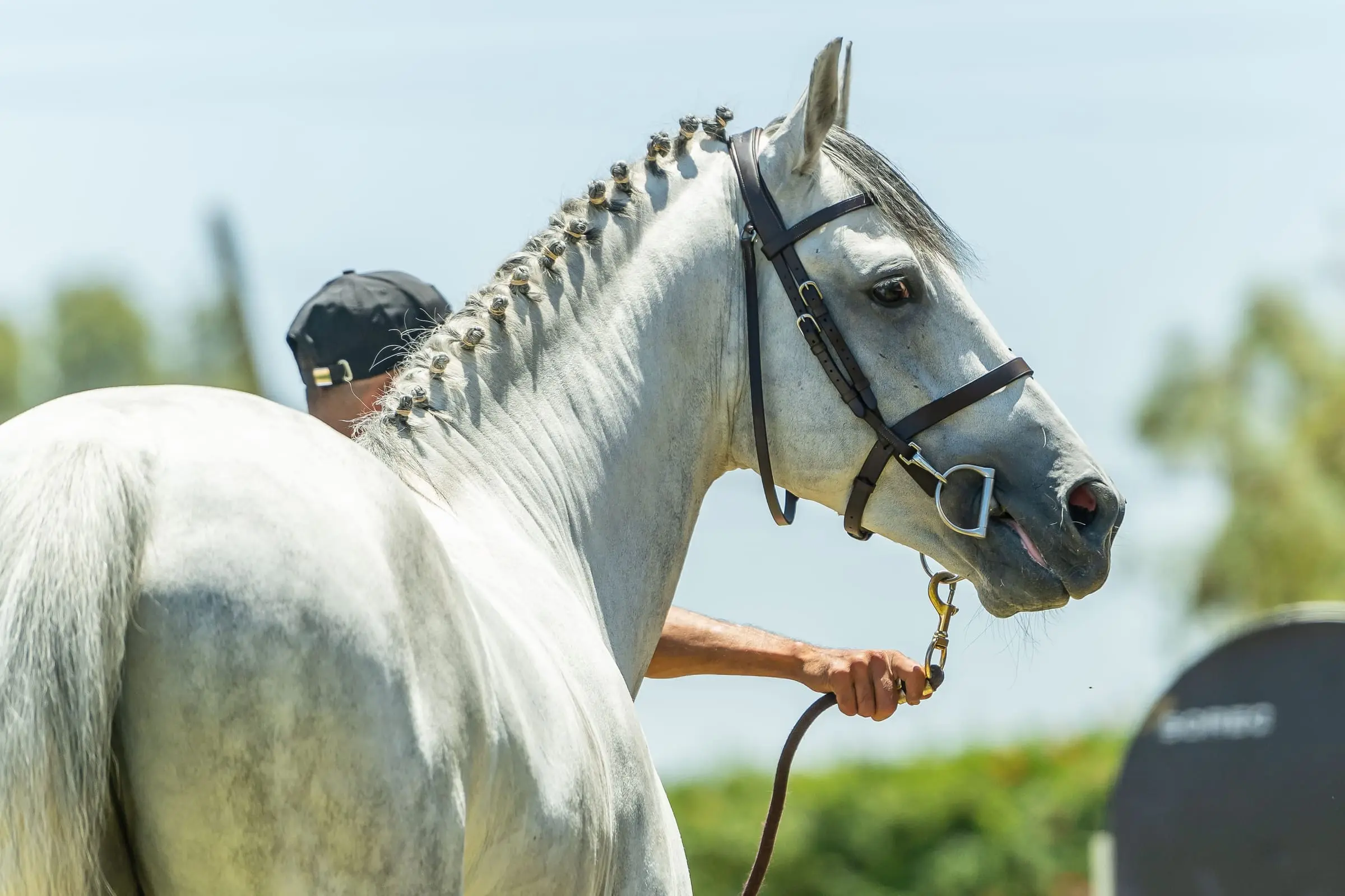
Conformation and gaits shows: how horses are judged
In-hand presentation, conformation and gait criteria, preparing your horse: understanding Barb and Arab-Barb breeding shows in Morocco.
Breeding2 min read
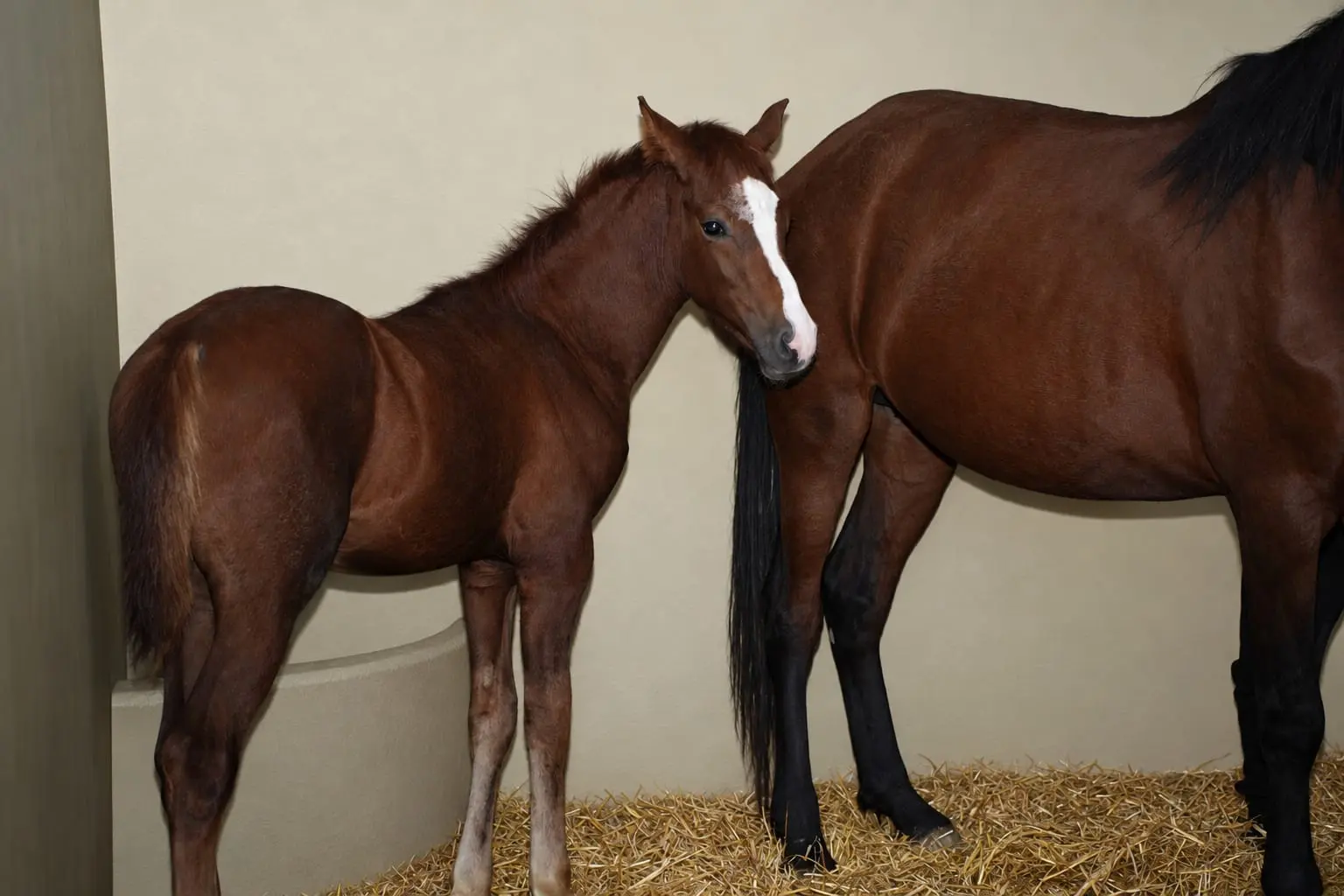
The birth of a foal: signs of foaling and the first hours
Warning signs, how foaling unfolds, the 1-2-3 rule, colostrum and first care: what to watch for when a foal is born.